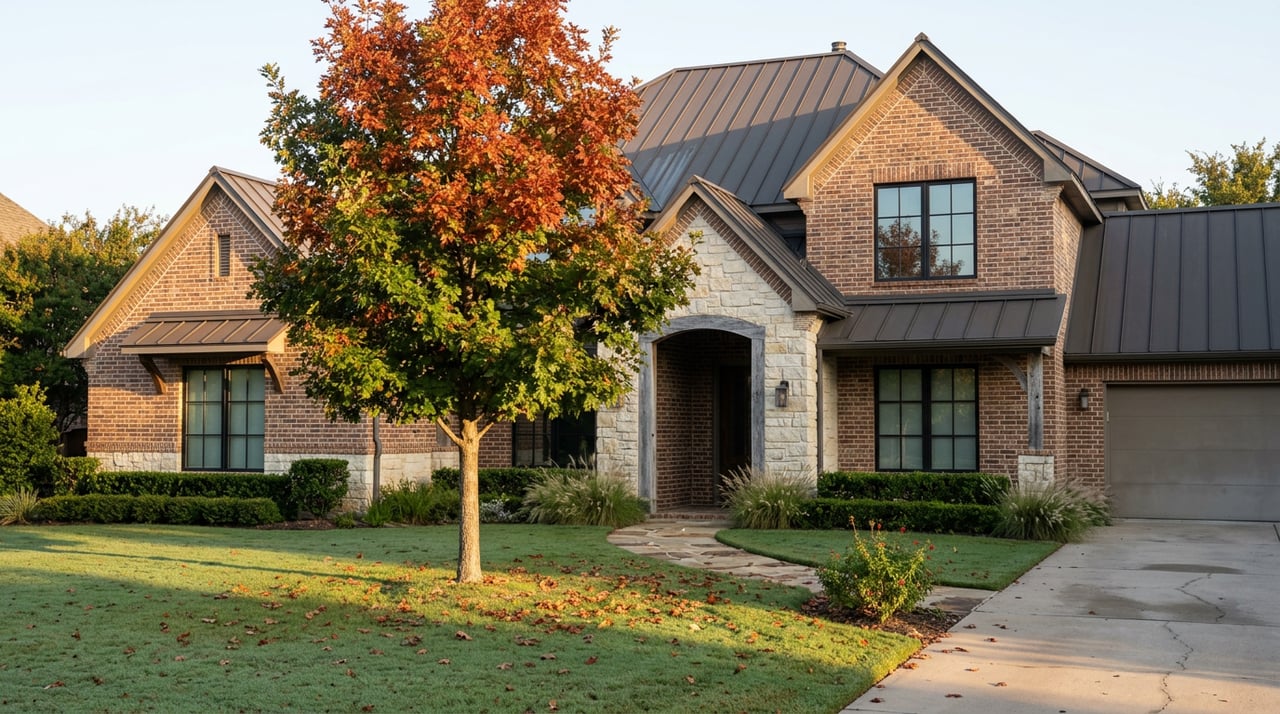
What Fall Actually Looks Like on Front Street in Aledo
September 3, 2026
September 3, 2026
Order a coffee at Press Cafe on a Tuesday morning and you'll notice something that wasn't true two years ago: there's a wait. Not a long one, but enough that you end up standing near the window watching the rest of Front Street work through its own morning, the diner across the way filling its counter seats, a contractor's truck parked outside the old storefronts that are slowly getting new tenants. Aledo's downtown has always had the bones. What changed this year is that someone official finally said so out loud.
In January 2026, the Texas Historical Commission announced its 2026 First Street Initiative cohort, and Aledo made the list. So did Mansfield, Cleburne, and Grand Prairie, three other North Texas cities that spend their weeks doing very different things but share the same problem: a historic downtown that needs a plan, not just goodwill. First Street is not a grant. It is a coaching and networking program, the kind of thing that connects a city's downtown staff with people who have already solved the parking, signage, and small business retention puzzles somewhere else in Texas. The city's own announcement framed it as support for public space activation, placemaking, and local business backing, which is bureaucratic language for something residents will actually feel: more reasons to park on Front Street and stay a while.
This matters less as a headline and more as a signal. Cities don't apply to revitalization cohorts for stretches of road that are already finished. They apply for the ones with momentum but no coordination yet, the ones where a new restaurant and a decades-old diner are operating a hundred feet apart without anyone connecting them into a district. That's Aledo's downtown right now. The Historical Commission just made it official.
The clearest evidence of that momentum sits within a two-minute walk of each other on Front Street. Press Cafe, the second location from chef Felipe Armenta, opened at 109 S. Front Street next to Aledo Commons Park, bringing a full bar and a breakfast-through-dinner menu into a building that sits squarely in the historic district. A hundred feet south, Dayne's Craft Barbecue has built a following at 100 S. Front Street with a menu that leans into specifics, brisket burritos and a bourbon bar among them, the kind of place that shows up in conversation because someone tried something on the menu that surprised them. And a block over, Aledo Diner at 213 N. Front Street keeps doing what it has always done: hearty breakfasts, a 6 a.m. opening time, and weekend crowds that run long enough to create a wait most regulars have learned to plan around.
None of these are new to each other in the sense of competing for the same table. They're new to each other in the sense that three years ago, this stretch of Front Street was a place you passed through to reach somewhere else. Now it's closer to a circuit, breakfast at the diner, lunch at Dayne's, an evening reservation at Press Cafe, all inside walking distance of Aledo Commons and the Veterans Plaza. That's the part the First Street designation is trying to formalize: turning proximity into an actual district identity.
Fall in Aledo also means race season, and this year the calendar puts two events on consecutive Sundays. The Walsh Lake Triathlon runs the morning of Sunday, September 13, starting at 7 a.m. at Walsh Lake Park. A week later, on Sunday, September 20, the Pinnacle Bank and VFW "Run for the V" 5K starts at 8 a.m. from Stevens Drive.
They're different kinds of mornings. The triathlon draws people who have been training since summer and treat Walsh Lake Park as a serious course, not a backdrop. The Run for the V is shorter, community-oriented, and backed by a bank and a VFW post rather than a triathlon club, which tends to bring out families and first-timers rather than people comparing splits. If you're the kind of resident who does one race a fall, the choice comes down to which kind of morning sounds more like you.
Once the triathlon and the 5K wrap up, the weekends shift toward something quieter: trail miles before the heat comes back, or after it finally leaves for good. The Parks of Aledo Trails, known locally as the POA Trails, are the biggest piece of that infrastructure and probably the least understood by anyone who doesn't ride or run them regularly. The system is eight connected loops across more than 135 acres, adding up to over 12 miles, split into three distinct zones: Prairie Trails south of Bailey Ranch Road, Bluffs Trails to the north with sustained climbs and creek crossings, and a Lakes Trail that winds along Shadow Creek past two small private ponds. Each loop runs one direction only, color-coded so first-time users can follow the signage without guessing, and the city posts trail maps at kiosks on Point Vista Drive and Jenkins Road for anyone heading out for the first time.
Closer to downtown, the options are simpler but still worth knowing by name. Aledo Community Center Park, off Old Annetta Road, has a concrete-paved walking loop and a garden bed maintained by the Parker County Master Gardeners, the kind of low-key detail that turns a lunch break into an actual walk instead of a lap around a parking lot. Bearcat Park keeps a playground and covered pavilion running for anyone whose fall weekend is built around a toddler and a picnic table rather than a trail map.
What ties the trail system to everything happening on Front Street is timing more than geography. Fall is when both come alive at once, cooler mornings pulling people onto the POA loops and cooler evenings pulling the same people back downtown afterward for dinner at one of the three restaurants that didn't all exist in the same form a few years ago.
None of this is dramatic on its own. A state coaching program isn't a ribbon-cutting. A second restaurant location isn't a headline. Two races a week apart is a scheduling quirk, not a trend piece. But put them next to each other and they describe a town that is quietly becoming more legible as a place, not just a collection of addresses between Weatherford and Fort Worth. Front Street has a reason to walk it now beyond the historic buildings. The trail system has enough scale that "I went for a hike" can mean four very different routes depending on which zone you picked. And the fall calendar has enough going on that residents are starting to have actual choices to make about how they spend a Saturday, rather than defaulting to whatever's closest.
That's usually how a town's identity solidifies, not with one big change but with enough small ones landing in the same season that people start describing the place differently without quite noticing they've done it.
If you're already living this version of Aledo and thinking about what it means for your own home, whether that's timing a move, sizing up what's changed in the market, or just understanding how downtown's momentum might affect property values down the road, the team at Lone Star Ladies Realty Group knows this stretch of Parker County closely enough to talk specifics. Schedule a free consultation whenever you're ready to talk about what any of this means for you.
Stay up to date on the latest real estate trends.
Pamela and Brooklyn have two different styles when it comes to realestate, which is what makes them a powerful team. They look forward to helping as many people as they can navigate the process of buying, selling or investing in realestate.